AI-Based Research: How Global Goals Berlin Finds the Right Partners
A keinsaas case study on introducing AI-based research and partner outreach for Global Goals Berlin: process audit, an n8n workflow with Parallel Web, Firecrawl, LinkedIn and FullEnrich, and full team handover.

How Global Goals Berlin Uses AI-Based Research to Find the Right Partners
Bringing the Olympic Games to Berlin in 2035 is not a small ambition. For Global Goals Berlin, a non-profit association driving exactly that vision, the challenge was structural: a big mission, a small team, and two jobs that would normally require a full research and business-development department. First, find the right partners for a project of this scale. Second, give the many sustainability and sports projects already happening across Berlin a platform to be seen.
Manual research does not scale to that. Identifying relevant organizations, finding the right contact person inside each one, verifying that the contact data is current, and doing it consistently across hundreds of targets is exactly the kind of work that quietly consumes a small team's entire week. This is the story of how keinsaas introduced an AI-based research and partner-outreach process that let Global Goals Berlin punch far above the weight of its headcount.

The starting point: a process audit, not a tool pitch
We did not start by recommending software. We started with a process audit. Before automating anything, you have to understand what actually needs to happen: what a good partner looks like, how a lead moves from "identified" to "contacted," where the team's judgment genuinely matters, and which steps are pure mechanical research that a machine can do better and tirelessly.
The audit surfaced a clear pattern. The high-value work, deciding which partners fit the mission and how to approach them, belonged with the team. The time-consuming work, finding organizations, locating the right decision-maker, and enriching contact data, was mechanical, repetitive, and perfect for automation.
Crucially, the audit also shaped the tooling decision. Global Goals Berlin was already using n8n for small automations. That mattered. Rather than introducing a new platform the team would have to learn from scratch, we built on the tool they already knew. Lower learning curve, no new vendor lock-in, and full control over their own data, which for a Berlin-based non-profit operating under GDPR is not a nice-to-have but a requirement.
Why the connected tools decide research quality
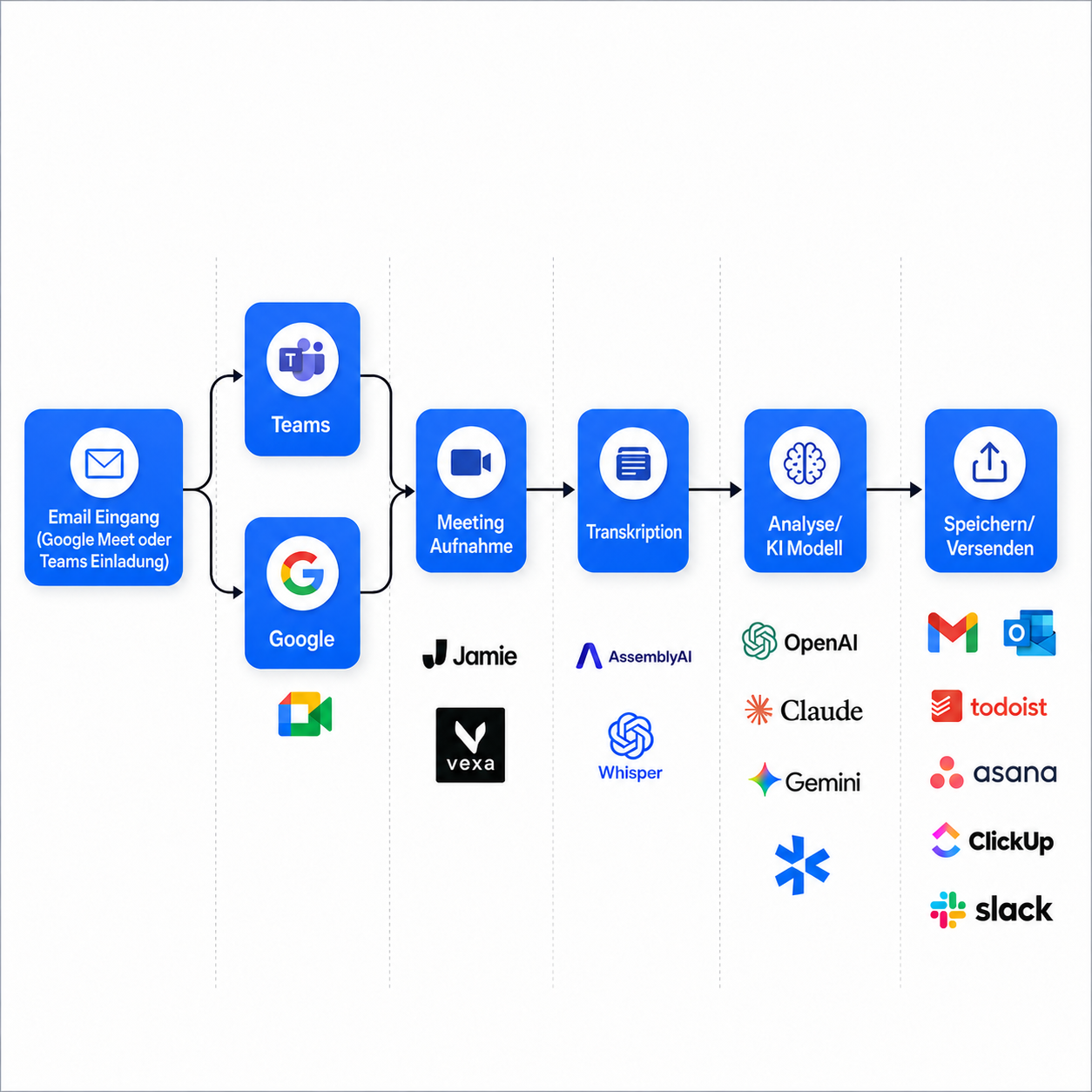
Here is the part most "AI automation" stories skip: the AI model is not what makes research good. The tools connected inside the workflow are. A language model on its own will produce fluent, confident, and frequently wrong answers about which organizations exist and who works there. Research quality and depth come from feeding the workflow real, current, verifiable data at every step.
For Global Goals Berlin, four tools did that job, each closing a specific gap:
- Parallel Web for deep research. This is the discovery engine that goes beyond a surface search to actually understand a topic and surface relevant organizations and context.
- Firecrawl for scraping. Once a target is identified, Firecrawl reliably extracts the structured content from its web presence, turning messy pages into clean, usable data.
- LinkedIn for finding the right people. An organization is not a contact. LinkedIn is where the workflow identifies the actual decision-maker to approach, rather than firing a generic message into an info@ inbox.
- FullEnrich for contact enrichment. Once the right person is identified, FullEnrich adds verified contact details, so outreach reaches a real, current inbox instead of bouncing.
Chained together inside n8n, these tools turn a vague goal ("find partners for Olympia 2035") into a repeatable pipeline that produces a qualified, enriched, contactable list, with the team stepping in only where judgment is actually needed.
Test phase first, then a real handover
We did not flip the whole thing on at once. After building the workflow, we ran a test phase to prove it produced quality results on real targets before scaling it up. This is deliberate: an automation that runs unstably at volume is worse than no automation, because it erodes trust in every result it produces.
Once the test phase succeeded, we did the part that most agencies skip: a comprehensive onboarding. The goal was independence, not dependency. The Global Goals Berlin team can now maintain the automation themselves and make small changes on their own, without a support ticket for every adjustment. We would rather hand over a process the client owns than sell a black box they have to keep paying us to touch.
The results
The numbers tell the story of what a small team gained:
- ~400 qualified contacts per month. The workflow surfaces and enriches roughly 400 partnership-ready contacts every month, a volume that would be impossible to research by hand at this team size.
- 15–20% response rate on partnership outreach. Because the pipeline finds the actual decision-maker and reaches a verified inbox, outreach lands, rather than disappearing into generic info@ addresses.
- 60% time saved. The team spends roughly 60% less time on research and outreach, and reinvests it in the judgment-heavy work: deciding who fits the mission and how to build the relationship.
- 90% cost saving vs. a sales development representative. Delivering this research and outreach capacity through automation costs around 90% less than hiring a dedicated SDR to do the same work.
What this means for other small teams
The Global Goals Berlin project is a clear example of a pattern we see constantly: a small team with an outsized mission, held back not by ideas or drive but by the sheer manual volume of research and outreach. AI-based research does not replace the team's judgment about who the right partners are. It removes the hours of mechanical work that stood between having that judgment and being able to act on it at scale.
The ingredients that made it work are repeatable. Start with a process audit, not a tool. Build on tools the team already knows where possible. Understand that research quality lives in the connected data sources, not the model. Prove it in a test phase. And hand over ownership through real onboarding, so the client is independent at the end.
If your team is carrying a mission bigger than its headcount, that gap is exactly what AI-based research and outreach automation is built to close. Explore what is possible with Navigator or browse our automation examples.

Hagen Rothmann
Co-Founder & Commercial LeadWith his first company, Coconaut.uk, he started automating processes in production and logistics early on. Today, he is driven by the question of how companies can handle recurring work more efficiently, autonomously, and at scale.
Connect on LinkedInReady to build something that fits your team?
Book a free discovery call and we'll map out where custom AI would meaningfully change your week.
Book a discovery call