6 min.By Hagen & Paul
How Task-Specific AI Agents Are Changing How Companies Find Talent
Disposable AI agents offer specialized, ephemeral automation for recruitment tasks like resume screening and candidate data processing, enhancing privacy and accuracy.
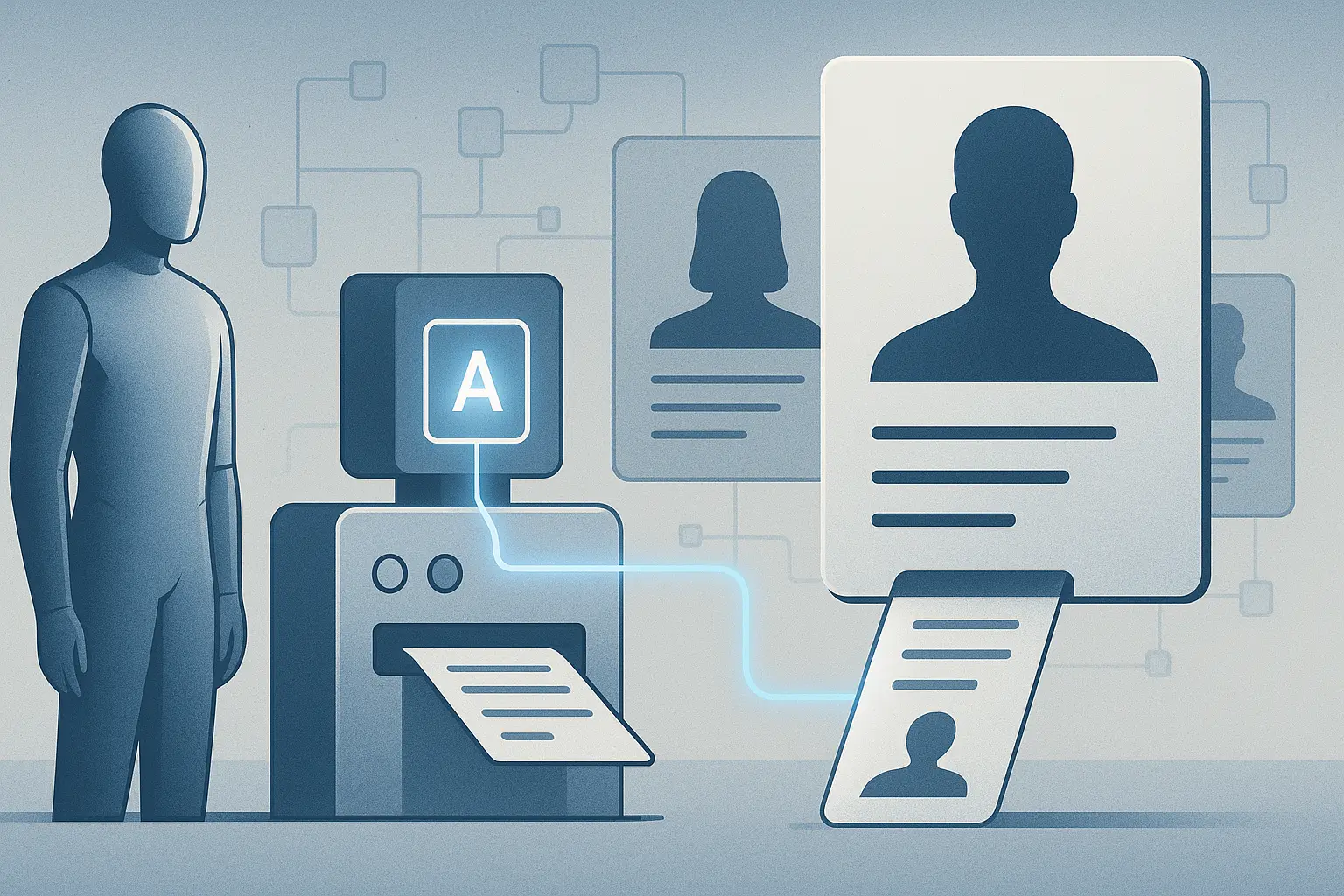
Beyond the One-Size-Fits-All Bot: The Rise of Disposable AI Agents
The conversation around enterprise AI is shifting. The initial promise of a single, all-knowing assistant is giving way to a more surgical, scalable, and secure reality: disposable AI agents. Also known as ephemeral, task-specific, or micro-agents, these are lightweight, single-use AI instances designed for one job. They are instantiated to perform a specific task—like analyzing a PDF, extracting invoice data, or updating a CRM record—and then terminated immediately upon completion. This emerging paradigm isn't just a technical nuance; it's a strategic response to the core challenges of accuracy, privacy, and operational efficiency that businesses face today.
Why Disposable? The Core Business Advantages
Moving from a monolithic, persistent "do-it-all" AI to a fleet of disposable agents offers tangible, bottom-line benefits. Here are the key advantages.
Enhanced Data Privacy by Design
In an era of stringent regulations like the EU AI Act, data sovereignty is non-negotiable. A persistent AI agent accumulates context and data across tasks, creating a potential liability. A disposable agent, by contrast, operates in isolation. It processes only the data necessary for its singular function and is destroyed afterward, leaving no residual data trail. This ephemeral nature virtually eliminates cross-task data leakage, a critical consideration for handling sensitive customer, financial, or legal documents.
Pinpoint Accuracy Through Specialization
Generalist AI models can suffer from "context drift" or hallucinations when switching between different tasks. A task-specific agent has a laser focus. For example, an agent built solely to parse invoice PDFs will be optimized for that format and data structure, ignoring irrelevant queries and reducing error rates. This specialization leads to higher-quality outputs, whether it's generating code, summarizing contracts, or categorizing support tickets.
Agile and Cost-Effective Scalability
Running a powerful, general-purpose AI model continuously is resource-intensive. The disposable model aligns with modern, cloud-native principles. As highlighted by industry trends, these agents are designed for on-demand deployment on cloud virtual machines. You spin up hundreds of agents to handle a peak workload (like end-of-month reporting) and spin them down when done, paying only for the compute time you use. This eliminates the cost and complexity of managing always-on infrastructure.
The 2026 Landscape: Multi-Agent Systems in Production
The most powerful applications of this concept are emerging through orchestration. We're moving towards sophisticated multi-agent systems, where different disposable agents play specialized roles within a workflow. Imagine a system where:
- A Planner Agent receives a goal ("Process this batch of vendor invoices").
- It decomposes the goal and dispatches individual Worker Agents to extract data from each PDF.
- A Critic Agent validates the extracted data against business rules.
- Finally, another agent updates the ERP system, and all instances are terminated.
This modular approach, facilitated by standardization protocols, allows for building resilient, self-healing processes where the failure of one micro-agent doesn't crash the entire system.
Practical Applications: From Theory to Workflow
Where does this fit into your daily operations? The use cases are both transformative and practical:
- Finance & Operations: An agent is instantiated to extract line items from an emailed invoice PDF, validate them against a purchase order, enter the data into the accounting system, and notify the approver—all before deleting itself.
- Software Development: "Vibe coding" trends, as discussed by Senorit, see developers using natural language to launch temporary agents for specific code reviews, multi-file refactoring, or generating unit tests, accelerating development without creating persistent code debt.
- Customer Service: For a single, complex customer claim, an agent can pull data from the CRM, analyze contract terms, suggest a resolution, execute the update via API, and log the action—all within an isolated, compliant environment.
Navigating the Shift: Considerations for Leaders
Adopting this agentic approach requires thoughtful strategy. Experts from MIT Sloan warn of "learning-authority dilemmas," where agents might operate beyond intended boundaries. This underscores the need for clear governance and maintaining human-in-the-loop oversight for high-stakes decisions. The goal isn't full, unchecked autonomy but rather scaling "digital labor" in a controlled, auditable manner.
The trend is clear: the future of efficient, secure, and accurate business automation lies in precision over power, in specialization over generality. It's about having a nimble team of expert "single-use" digital workers at your command, rather than one overburdened, all-purpose assistant.
Discover how a strategic approach to AI agents can simplify your specific workflows and unlock new levels of operational efficiency. The team at keinsaas specializes in implementing tailored, intelligent automation that works for your business.
What's next
Ready to build something that fits your team?
Book a free discovery call and we'll map out where custom AI would meaningfully change your week.
Book a discovery call